Company Profile
Anhui Hitech Intelligent Equipment Co., Ltd.
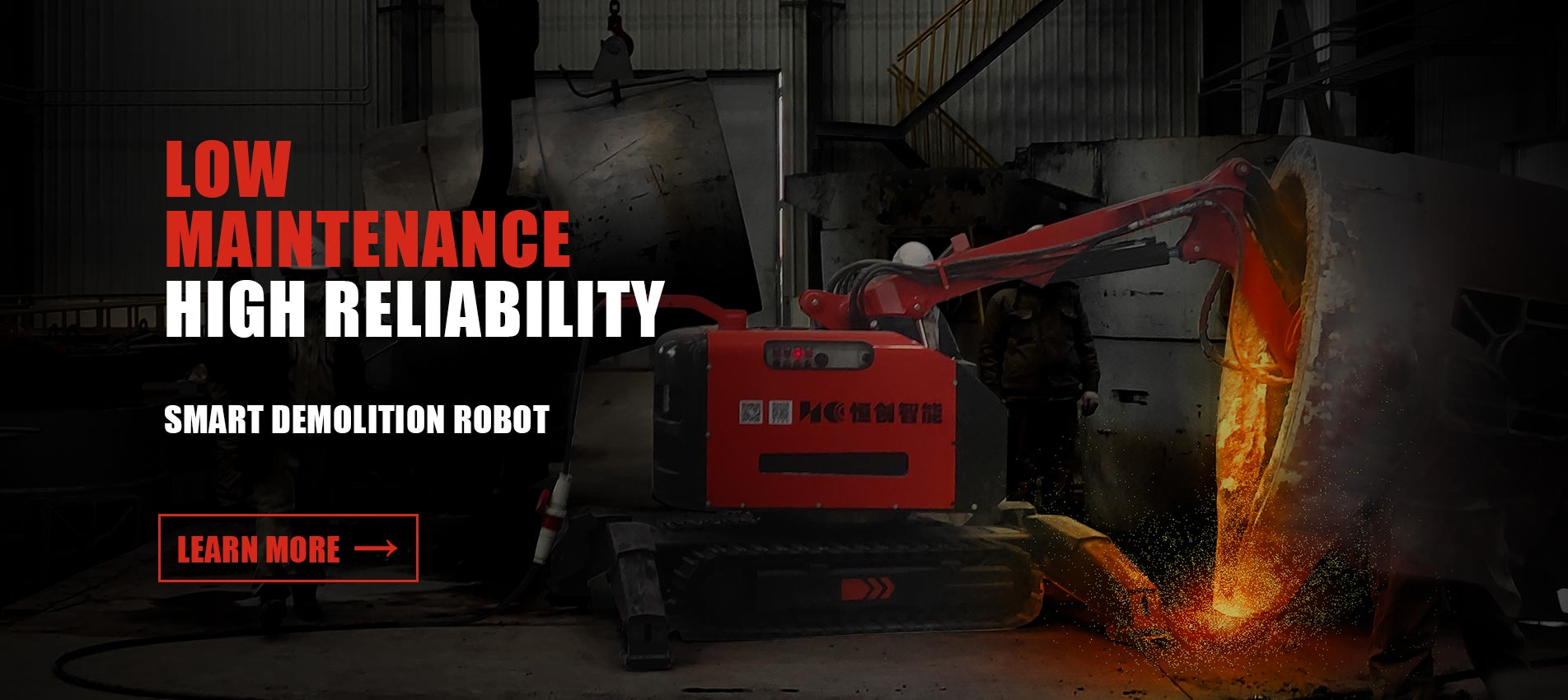
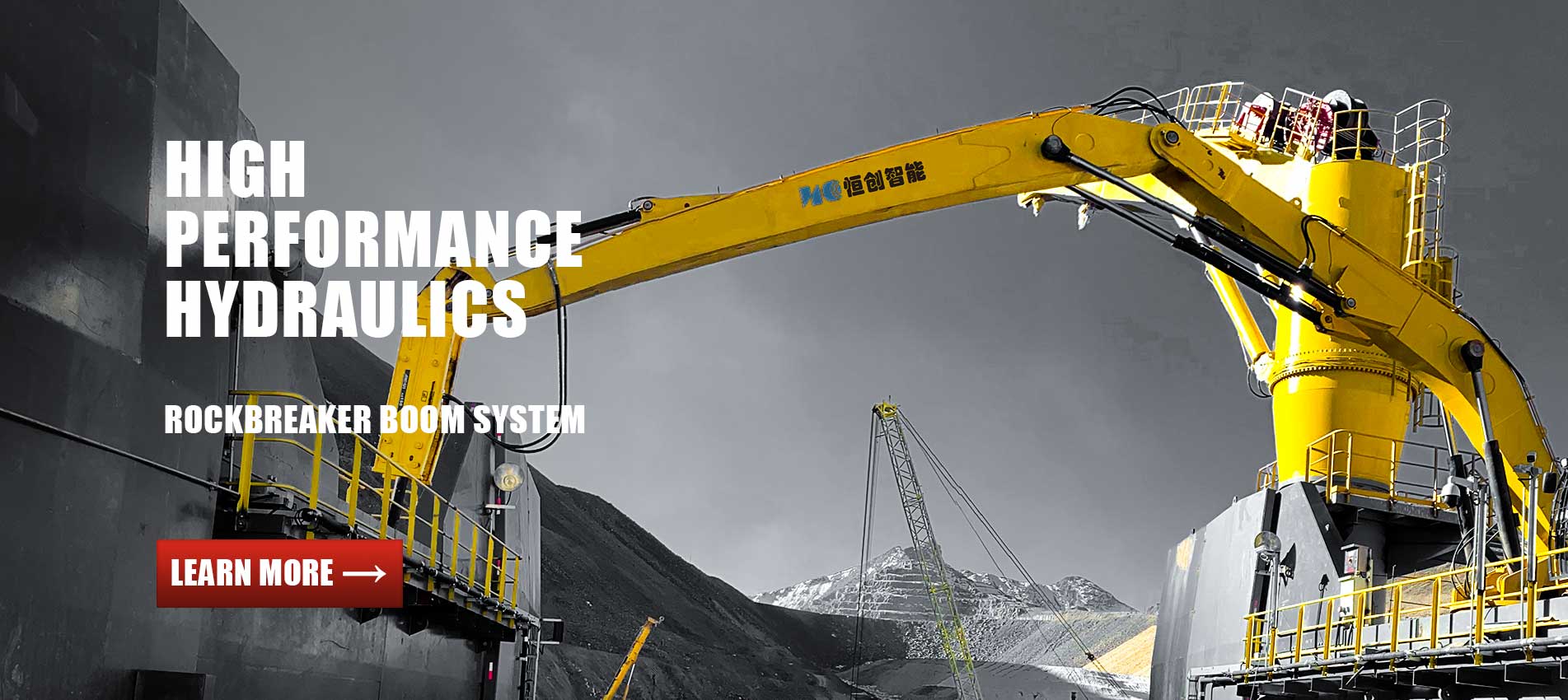
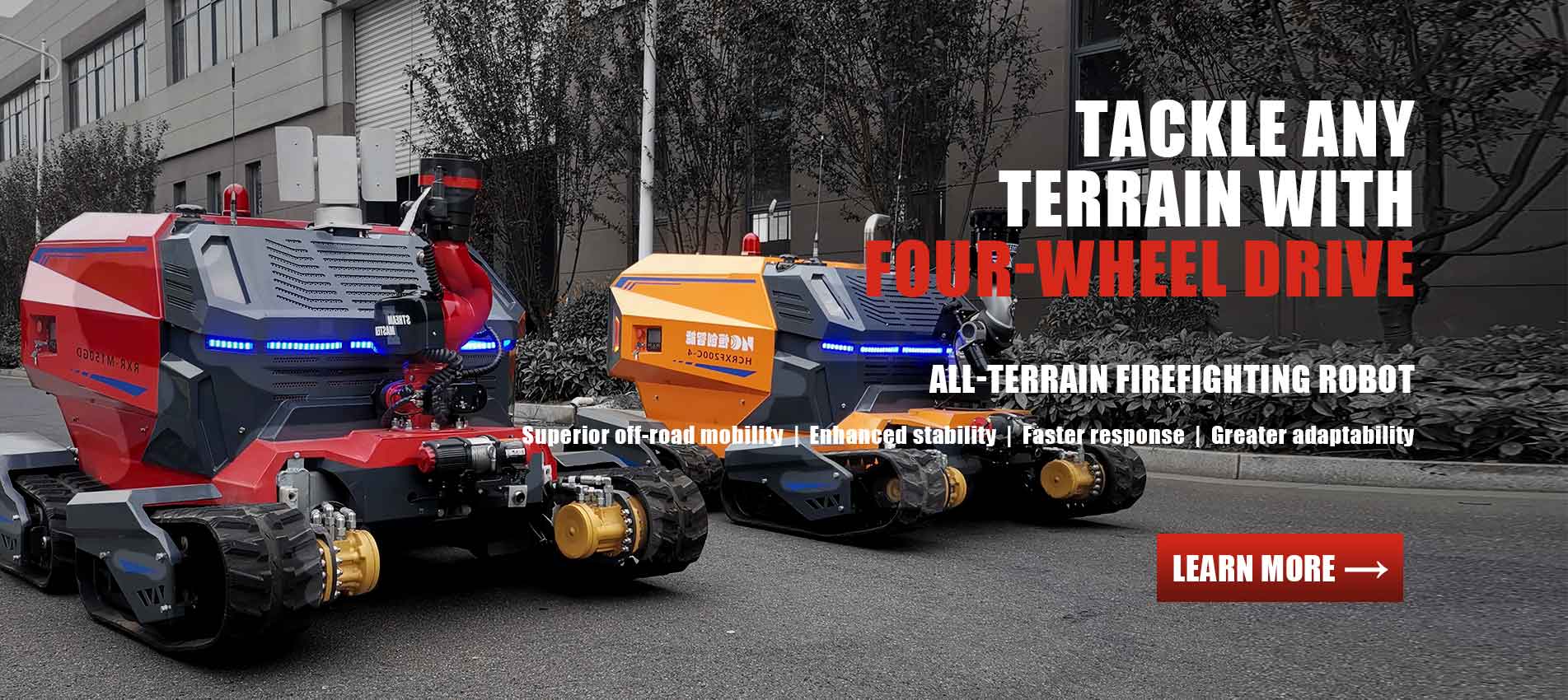
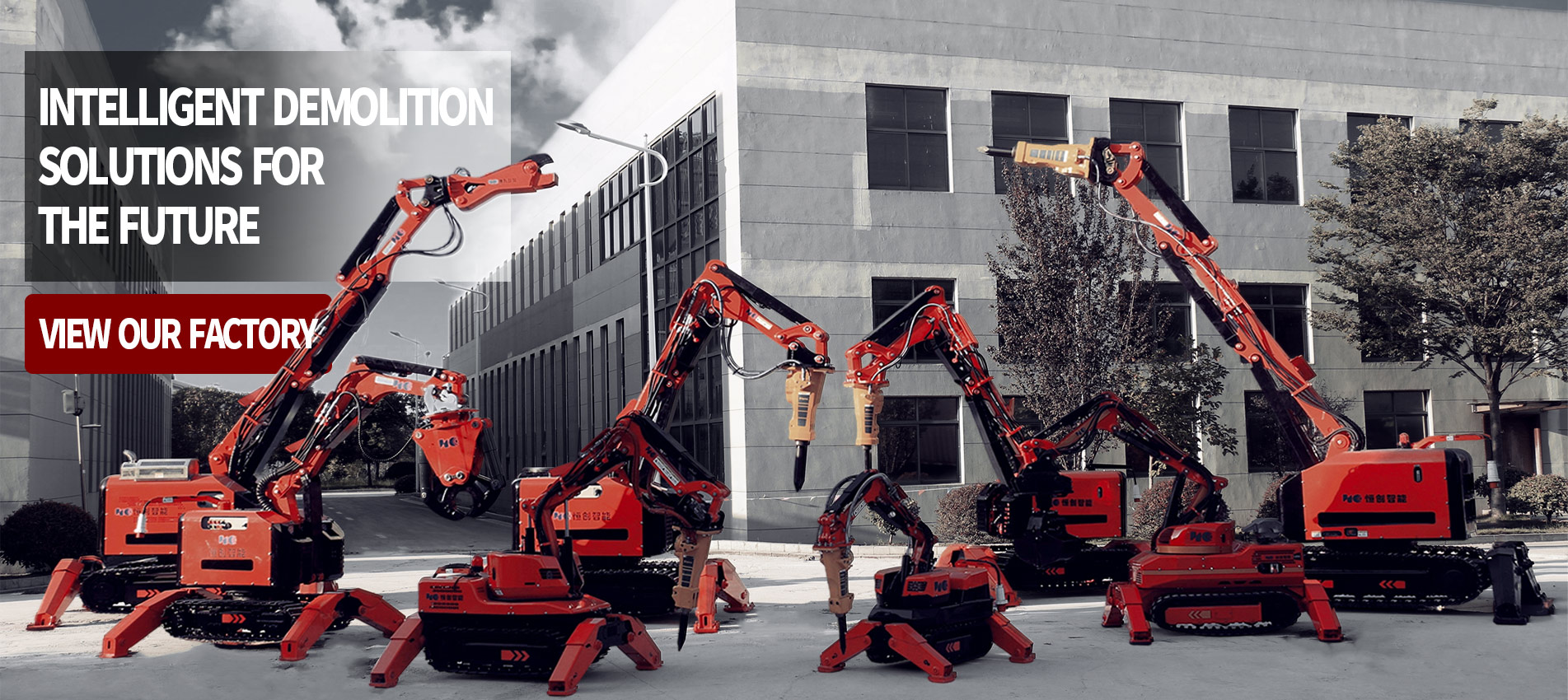
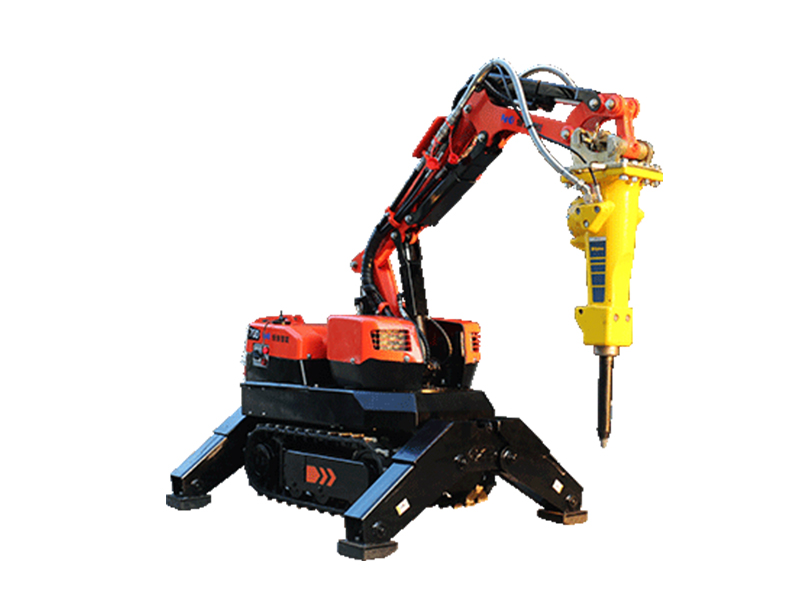
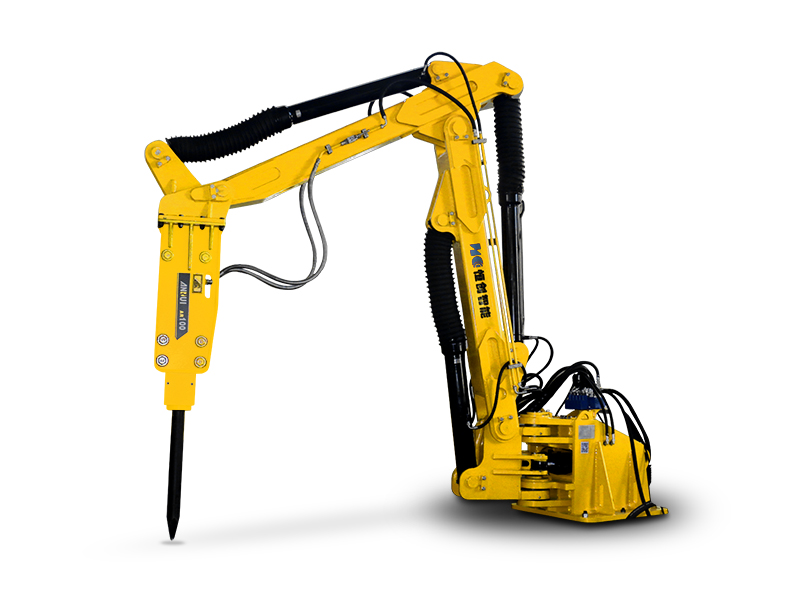
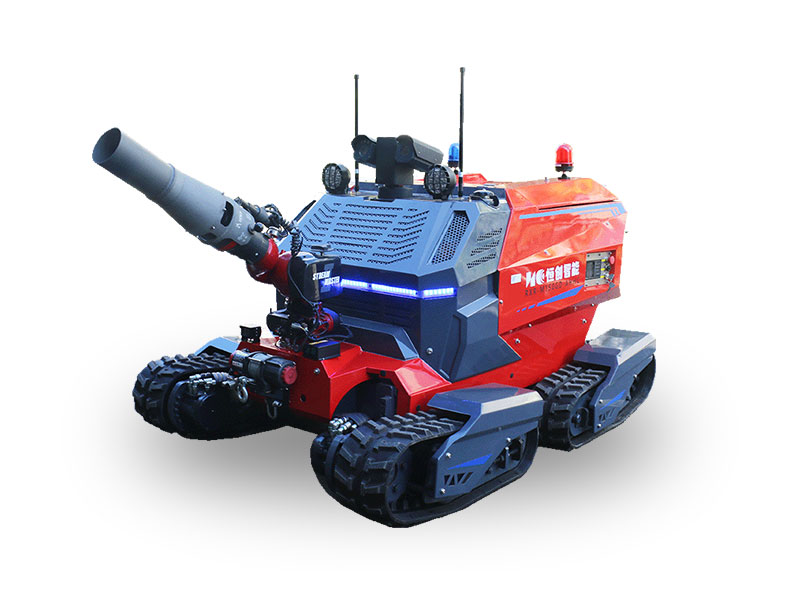
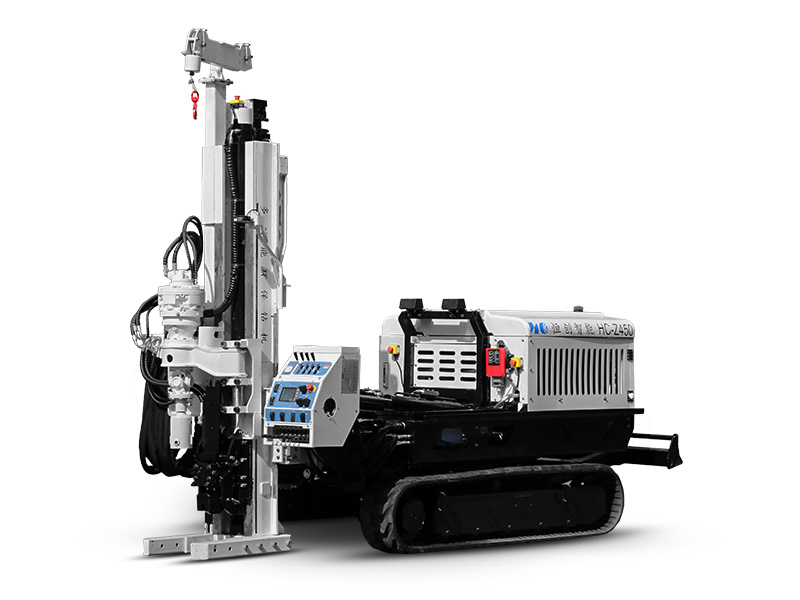
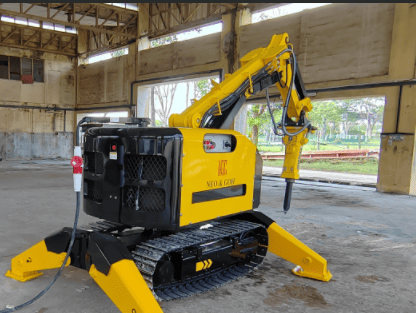
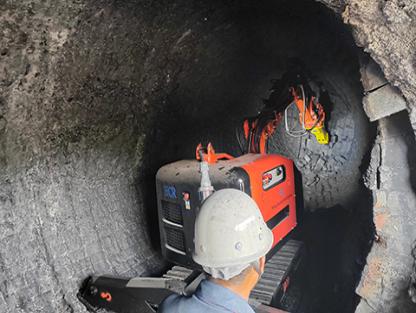
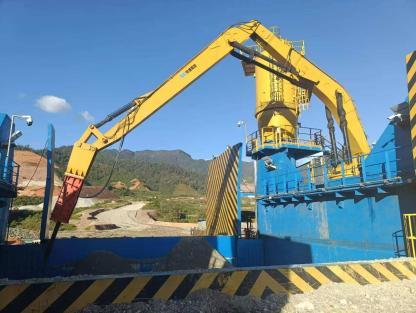
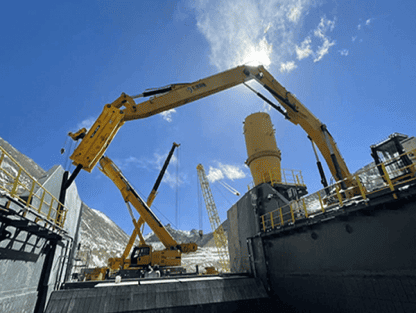
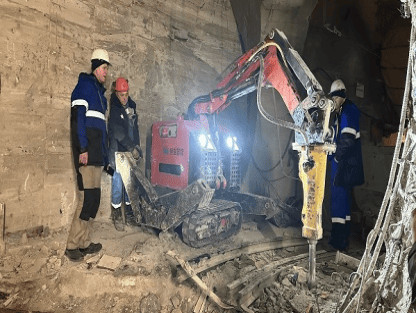
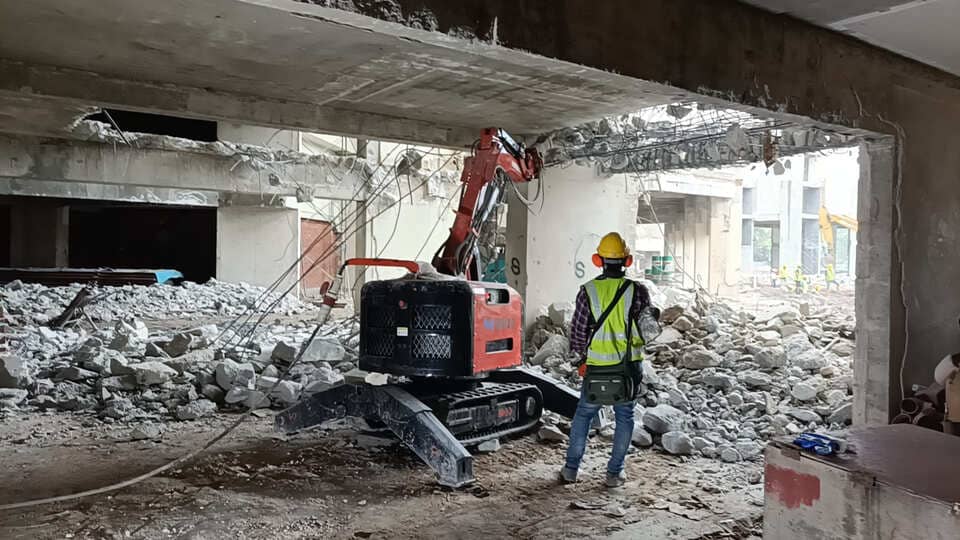
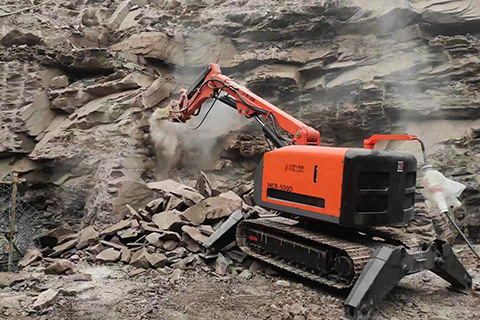
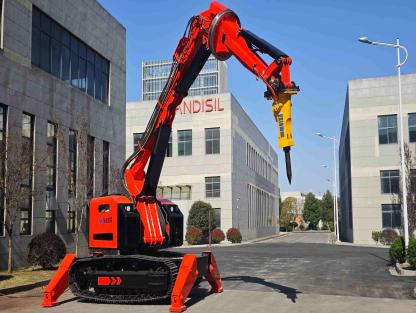
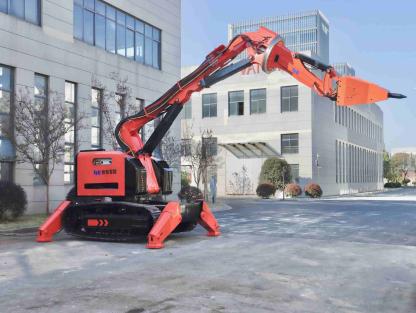
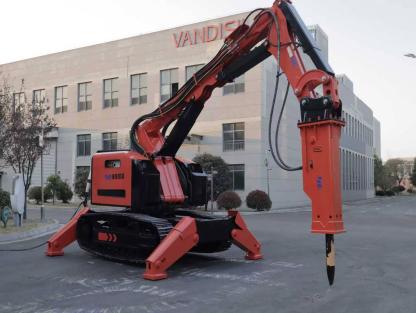
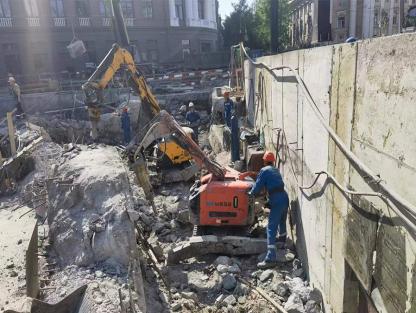
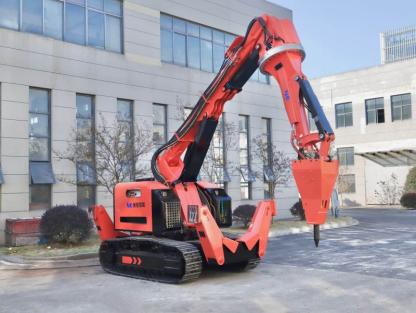
Hitech Intelligent is a professional company specialized in providing various engineering robots and overall solutions for construction operations in high-risk environments and special working conditions such as high temperature, high dust, high radiation, toxic and harmful environments. It is committed to the research and development of key technologies and equipment for special robots in the field of extreme environment operations. The products mainly include: demolition robots, rockbreaker boom system, soil drilling rig machine, fire fighting robots, etc. Hitech's products are widely used in industrial fields such as metallurgy, mining, cement, construction, environmental protection, subway tunnels, as well as special fields such as fire fighting, nuclear industry, emergency rescue, and military.
more about us
Company Profile
Product Categories
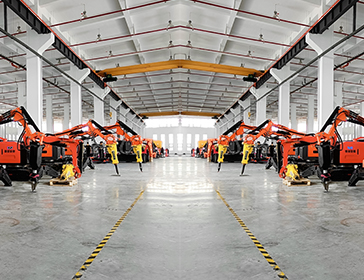
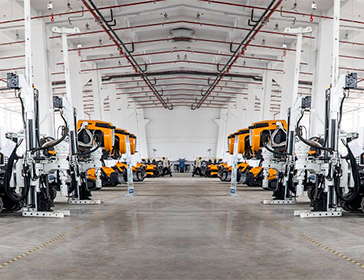
20+ YEARS OF PRODUCT RESEARCH AND DEVELOPMENT. Specializing in the R&D, design, production and sales.
View more our factory
  • Professional Professional
  • Technically Advanced Technically Advanced
  • Precisely Manufactured Precisely Manufactured
20
20
YEARS OF PRODUCT RESEARCH AND DEVELOPMENT
6000
6000
Square Meter Plant Area
150
150
Patents
20
20
Senior R&D Engineers
Our Cases
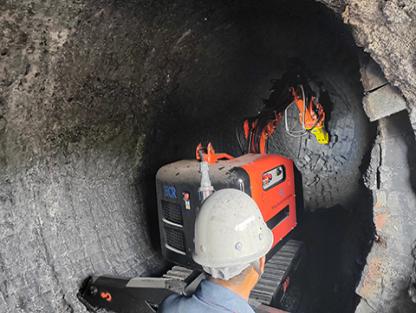
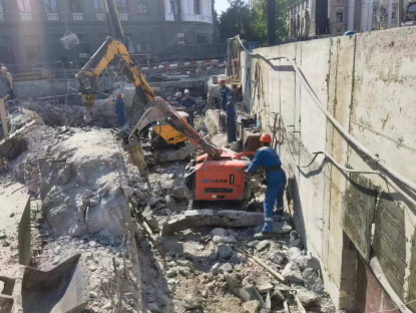
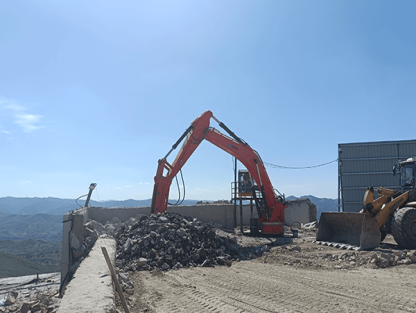
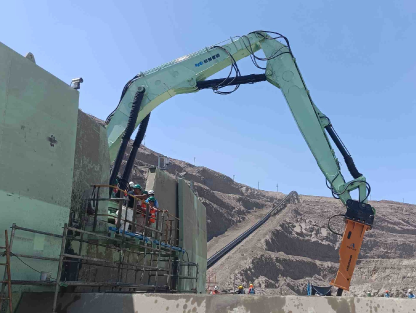
For industries such as steel, metallurgy, mining, cement, nuclear industry, and fire emergency response that require extreme environmental operations, we use robots to replace humans to complete high-risk environmental operations, address the pain points of "being unable to be, being unable to do, being unwilling to do".
want to know more? click here to view all project cases
Latest News
  • Forge the Blade, Charge Ahead — Victory Is Ours
    February 03, 2026

    Forge the Blade, Charge Ahead — Victory Is Ours

    Anhui Hitech Intelligent Equipment Holds the 2025 Annual Meeting Under the theme “Forge the Blade, Charge Ahead — Victory Is Ours,” Hitech Intelligent recently held its 2025 Annual Meeting. Colleagues from across the company gathered to review the year’s progress, recognize outstanding contributions, and align on priorities for the year ahead. The event concluded successfully in a warm and spirited atmosphere. Year-End Review and Target Alignment The year-end summary meeting kicked off the annual conference, the General Manager summarized key progress made over the past year, including technology advancement and market expansion in the intelligent equipment sector, and outlined the company’s strategic direction going forward. Department heads then signed the annual target responsibility agreements, reinforcing shared accountability and execution focus for the new year. Recognition and Awards The awards ceremony was held during the evening session. The company presented honors including the Technical Breakthrough Blade Award, Market Expansion Steed Award, Lean Manufacturing Craftsman Award, and Outstanding Collaboration Team Award. These recognitions highlighted exemplary performance and teamwork, and reflected the company’s commitment to encouraging excellence and value creation. Performances, Engagement, and Lucky Draw Employees delivered a series of performances, complemented by interactive games that strengthened team engagement. The lucky draw ran throughout the evening and added excitement to the program, creating memorable moments for attendees. Looking Ahead This annual meeting served as both a year-end review and a rallying point for the future. In the coming year, Anhui Hitech Intelligent Equipment Co., Ltd. will continue to uphold a results-oriented approach, strengthen execution, and pursue steady, high-quality development—working together to deliver stronger outcomes for customers, partners, and the market.
    Read More
  • Powerful HCR 900R Demolition Robot for Cleanup Operations
    November 25, 2025

    Powerful HCR 900R Demolition Robot for Cleanup Operations

    Powerful HCR 900R Demolition Robot for Cleanup Operations Whether you need power or precision for a cleanout, the HCR 900R demoliton robot delivers reliable performance every time.The HCR900R, the heaviest robot in Hitech’s demolition robot lineup, offers an incredible 10-meter reach and 360-degree arm rotation. This NEW powerful demolition robot excels in heavy and demanding demolition and maintenance work in the metal processing industry. Equipped with Hitech’s unique heat and impact-protected process breaker, it is perfect for working with hot ladles, converters, runners, and furnaces. Enhanced maneuverability allows for precision work like never before.
    Read More
  • Hitech's Next-Generation Demolition Robot – The All-New HCR 900
    November 21, 2025

    Hitech's Next-Generation Demolition Robot – The All-New HCR 900

    Hitech's Next-Generation Demolition Robot – The All-New HCR 900 Building on the success of its predecessors, Hitech Intelligent Equipment has independently developed this new robot to replace foreign products, fill the gap in the domestic demolition robot market, and meet the extreme requirements of the most demanding underground hard rock operations. The HCR 900 represents a significant improvement over its predecessor in many aspects. The robot's design and engineering are more refined, its power is stronger, its operation is more precise, and its new hydraulic breaker is more powerful. All of this is achieved with almost no increase in size and weight, while output power is increased by 25%. The HCR900 demolition robot is available in two different models: the standard HCR 900D equipped with the heaviest and most powerful hydraulic breaker, and the HCR 900R equipped with a high-precision rotating arm system. The HCR 900R is designed for applications where range and precision are more important than power, offering maximum flexibility. It features a 360-degree continuous rotating boom for smooth movement and maximum accuracy. It also has thermal insulation for use with high-temperature refractory materials in metal processing plants and is equipped with a thermally insulated hydraulic breaker. Despite its large size and weight exceeding 11 tons, the machine is designed for single-person maintenance. Without the need for any heavy-duty handling, the HCR 900 packs powerful performance into a compact and intelligent design.
    Read More
  • Hitech Intelligent Launches China's Largest Demolition Robot
    November 21, 2025

    Hitech Intelligent Launches China's Largest Demolition Robot

    Hitech Intelligent Launches China's Largest Demolition Robot Leveraging its strong technological capabilities, Hitech has independently developed and proudly launched its new product, the HCR 900 demolition robot, currently the largest and most powerful demolition robot in China. Building upon the success of its predecessor, it has undergone a comprehensive upgrade, with significant improvements in power and performance. The HCR 900 boasts a 25% increase in power, setting a new benchmark for reliability in the industry. The HCR 900 is available in two models: the standard HCR 900D, equipped with the most powerful hydraulic breaker in demolition robot history; and the HCR 900R, equipped with a high-precision rotary arm system.
    Read More
  • Introducing the HCR900D Demolition Robot
    November 12, 2025

    Introducing the HCR900D Demolition Robot

    Hitech Intelligent has developed the HCR900D, a demolition robot designed for heavy-duty industrial applications. As the largest model of its kind in China, it represents a significant step in filling the market's need for a large-scale, domestically produced demolition robot with independent intellectual property rights. The HCR900D is built to address the specific challenges of heavy demolition and tunnel excavation. Its primary function is to provide a reliable and powerful solution for tasks that require high impact force and sustained operation. Focused on Power and Performance The core of the HCR900D is its heavy-duty hydraulic breaker. This component is engineered to deliver a level of impact force that meets the demands of the most strenuous demolition work. In practical terms, this means it can efficiently break down thick reinforced concrete, hard rock, and other stubborn materials, potentially reducing project time on large-scale jobs. Designed for Reliability and Ease of Maintenance Beyond its power, the HCR900D is designed with a focus on operational uptime and durability. Its construction utilizes a robust frame and components selected to withstand the stresses of continuous use in challenging environments. The design philosophy prioritizes straightforward maintenance, with easily accessible service points to simplify routine checks and minimize downtime. This approach is intended to provide a consistent and dependable performance on the job site. Practical Operational Flexibility The HCR900D demolition robot possesses the mobility and independent operation capabilities required to handle a variety of harsh working conditions, especially for heavy demolition and tunneling.In summary, the HCR900D from Hitech Intelligent is a practical tool developed for contractors and enterprises that require a capable and reliable demolition robot. It combines significant breaking power with a design focused on durability and ease of maintenance. For more detailed specifications and operational data, please contact Hitech Intelligent. We can provide further information on how the HCR900D can be applied to your specific project requirements.
    Read More
  • What equipment is used in tunnel construction?
    February 24, 2026

    What equipment is used in tunnel construction?

    What equipment is used in tunnel construction? Tunnel construction uses a wide range of equipment, and the exact mix depends on geology, tunnel diameter, excavation method, safety requirements, and whether the work is new construction, enlargement, rehabilitation, or tunnel demolition. In modern projects, one category is becoming especially important in confined and hazardous environments: the demolition robot. When people ask “What equipment is used in tunnel construction?”, they often think first of tunnel boring machines (TBMs), drill jumbos, shotcrete rigs, loaders, and ventilation systems. Those are all essential. But in many practical tunnel scenarios—especially repair, lining removal, secondary excavation, section widening, concrete trimming, and controlled tunnel demolition—a demolition robot can be one of the most efficient and safest tools on site. This article explains the main equipment used in tunnel construction, with a special focus on tunnel demolition applications, and why a demolition robot is increasingly preferred over manual breaking or oversized excavators in confined spaces. 1) Why equipment selection matters in tunnel construction Tunnel sites are difficult by nature: limited access, low headroom, poor visibility, dust, vibration, groundwater, unstable rock, and strict safety controls. Because of this, equipment for tunnel work must be selected based on more than just raw power. Key selection criteria include: Working envelope (can it fit and move inside the tunnel?) Reach and precision (especially near tunnel crown and sidewalls) Safety distance (operator exposure to falling rock or collapsing concrete) Emissions and ventilation load (electric systems reduce underground fumes) Mobility and setup time Tool versatility (breaker, crusher, scaler, bucket, milling head) Maintenance access Production efficiency per shift This is exactly where a demolition robot becomes valuable. A demolition robot combines compact dimensions, remote operation, and high impact force for controlled robot demolition in narrow tunnel environments. 2) Core equipment used in tunnel construction Tunnel construction is not one machine but a coordinated system. The following are common equipment categories. A. Excavation equipment 1. Tunnel Boring Machine (TBM) A TBM is used for continuous mechanical excavation in long tunnels with consistent geology. It is highly productive but expensive and project-specific. TBMs are ideal for many metro, rail, and utility tunnels, but they are not the right answer for every repair or demolition task. 2. Drill jumbo A drill jumbo is used in drill-and-blast tunneling to drill blast holes in rock faces. It may also be used for rock bolting and support installation depending on configuration. 3. Roadheader A roadheader is a mechanized cutting machine often used in softer rock or mixed conditions. It provides controlled excavation and can be useful in some tunnel enlargement jobs. 4. Excavator with hydraulic breaker Traditional excavators with breakers are widely used in portals and larger tunnels. However, in tight sections, low headroom, and precise lining removal, they can be less efficient and less safe than a demolition robot. B. Support and stabilization equipment 1. Shotcrete machine / shotcrete sprayer Used to apply sprayed concrete for immediate ground support after excavation. 2. Rock bolting rig Installs bolts to stabilize surrounding rock and prevent collapse. 3. Steel rib and segment handling systems Used in NATM or segmental lining systems depending on the tunnel type. 4. Grouting equipment Pumps grout for water control, void filling, and ground stabilization. C. Muck handling and material transport 1. Loaders (LHD) Load-haul-dump machines remove broken rock and debris. 2. Dump trucks / mine trucks Transport spoil from the face to disposal or processing areas. 3. Conveyors Common in TBM projects for continuous muck removal. In tunnel demolition, muck handling must also support broken concrete, lining fragments, and reinforced debris. A robotic demolition machine can improve fragmentation control, making loading easier and reducing oversized chunks. D. Safety, environmental, and utility systems 1. Ventilation fans and ducts Critical for air quality, dust management, and blast gas removal. 2. Dust suppression systems Water spray, misting, and localized extraction reduce airborne particles. 3. Lighting and power distribution Underground lighting and protected power systems are essential for visibility and safe equipment operation. 4. Dewatering pumps Manage groundwater seepage and maintain workable conditions. 5. Monitoring instruments Used for deformation, settlement, vibration, gas detection, and structural safety. 3) Where tunnel demolition fits into tunnel construction Tunnel demolition is not only “tearing down tunnels.” It includes many controlled tasks inside active or partially active tunnels, such as: Removing damaged tunnel lining Demolishing old concrete sections before rehabilitation Enlarging tunnel profiles for upgraded clearance Breaking invert slabs for drainage replacement Removing cross-passage walls or temporary structures Trimming overbreak and correcting geometry Demolishing fire-damaged or deteriorated sections Decommissioning utility tunnels or abandoned passages In these tasks, the goal is not maximum brute force. The goal is controlled removal with minimal collateral damage, which is why robot demolition methods are increasingly used. 4) Why a demolition robot is ideal for tunnel demolition A demolition robot is a compact, remotely operated machine designed for breaking, crushing, scaling, and selective demolition. In tunnel environments, a demolition robot often outperforms manual jackhammer teams and can complement or replace larger excavators in confined zones. Key advantages of a demolition robot in tunnels 1. Remote operation improves safety Tunnel demolition can involve unstable rock, falling concrete, rebar rebound, and dust exposure. A demolition robot allows the operator to stand at a safer distance while maintaining visibility and control. This is a major safety advantage over close-contact manual breaking. 2. Compact size for tight spaces A demolition robot is designed to pass through restricted access points and work in low headroom areas. This is crucial in rail tunnels, utility tunnels, and rehabilitation projects where space is limited and shutdown windows are short. 3. High power-to-weight ratio A demolition robot delivers strong hydraulic breaking force relative to its size. This makes it suitable for reinforced concrete lining removal without requiring a large carrier machine. 4. Precision for selective demolition Tunnel rehabilitation often requires removing only one layer or one damaged zone. A demolition robot supports accurate robot demolition, reducing the risk of damaging adjacent structural elements. 5. Electric options reduce underground emissions Many tunnel contractors prefer electric or electro-hydraulic equipment underground because ventilation capacity is limited. An electric demolition robot can reduce diesel fumes and help improve air quality. 6. Multi-tool flexibility A robotic demolition machine can be fitted with: Hydraulic breaker Crusher Scaler Bucket Grapple Milling head (depending on model and application) This flexibility makes one demolition robot useful across multiple stages of tunnel demolition and rehabilitation. 5) Common tunnel demolition applications for robot demolition A. Tunnel lining removal In refurbishment projects, old lining may need partial or full removal before new waterproofing and relining. A demolition robot can break lining in a controlled sequence, reducing overbreak and avoiding unnecessary vibration. B. Invert slab demolition Drainage upgrades often require breaking the tunnel invert. A demolition robot is effective here because it can work in constrained conditions while keeping operators out of the direct impact zone. C. Tunnel enlargement and profile correction When a tunnel must meet updated clearance standards, selective wall and crown trimming may be required. A demolition robot is well suited for this type of robot demolition, where precision is more important than bulk excavation speed. D. Cross-passage and niche demolition Creating or modifying emergency niches, equipment bays, or cross-passages may involve removing concrete in narrow sections. A compact robotic demolition machine is easier to deploy than large conventional equipment. E. Scaling and loose material removal After blasting or partial demolition, loose rock and unstable fragments can be dangerous. A demolition robot equipped for scaling helps stabilize the area before workers re-enter. 6) Demolition robot vs excavator breaker in tunnel work Both tools have a place, but the choice depends on tunnel conditions. Use an excavator breaker when: The tunnel section is large and accessible Headroom is sufficient Reach requirements are simple Precision is less critical Diesel ventilation constraints are manageable Use a demolition robot when: Space is restricted Headroom is low Safety exposure is high Selective demolition is required Emissions must be minimized Frequent tool changes are needed The work is tunnel rehabilitation or controlled tunnel demolition In many projects, the best approach is combined: a demolition robot performs detailed robot demolition in constrained sections, while excavators handle bulk removal and loading where access allows. 7) Practical equipment package for tunnel demolition projects A typical tunnel demolition setup may include: Demolition robot (primary selective breaking unit) Backup robotic demolition machine or compact excavator Hydraulic power system / electrical supply Breaker and crusher attachments Dust suppression equipment Ventilation fans and ducting Lighting tower / underground lighting LHD or skid loader for debris movement Dump truck or haulage system Scaffolding or work platform (if needed) Survey and monitoring equipment Gas detection and safety systems This package supports efficient robot demolition while maintaining safety and production consistency. 8) Productivity and safety considerations in tunnel demolition Choosing a demolition robot alone is not enough. Performance in tunnel demolition also depends on planning and method statement quality. Best practices Define demolition sequence (crown, wall, invert, zones) Confirm structural limits and no-go areas Monitor vibration where adjacent structures are sensitive Manage dust and visibility continuously Plan debris size for transport equipment Schedule maintenance checks for hydraulic tools Train operators specifically for tunnel robot demolition A well-operated demolition robot can improve shift output not only by breaking faster, but by reducing stoppages, repositioning time, and manual rework. 9) The future of tunnel demolition equipment Tunnel construction is moving toward safer, cleaner, and more controlled operations. This trend supports wider use of the demolition robot in rehabilitation, infrastructure upgrades, and decommissioning. As projects become more constrained—especially in urban rail, utility corridors, and aging tunnels—the role of robot demolition will continue to expand. A modern robotic demolition machine is no longer a niche option; it is increasingly a standard tool for contractors who need precision, safety, and flexibility underground. So, what equipment is used in tunnel construction? The answer includes TBMs, drill jumbos, shotcrete rigs, bolters, loaders, ventilation systems, and support equipment. But when the task involves tunnel demolition, selective removal, or confined-space rehabilitation, the demolition robot is often one of the most important machines on site. FAQs 1) Is a demolition robot only used for demolition, or can it support other tunnel tasks? A demolition robot is mainly used for controlled breaking and removal, but it can also support scaling, trenching, and material handling depending on attachments. In tunnel rehabilitation, a demolition robot may perform multiple tasks across the same project phase, which improves utilization and reduces equipment changes. 2) What is the difference between robot demolition and manual jackhammer work in tunnels? Robot demolition uses a remotely operated machine to deliver hydraulic force with better reach, safety distance, and consistency. Manual jackhammer work may still be used for minor finishing, but for larger tunnel demolition scopes, a demolition robot usually provides better productivity and lower operator exposure to dust, vibration, and falling debris. 3) How do I choose the right robotic demolition machine for tunnel demolition? Select a robotic demolition machine based on tunnel dimensions, access limits, concrete strength, reinforcement density, power availability (electric vs diesel support systems), required attachments, and target production rate. For tunnel demolition, the best demolition robot is the one that balances compact size, reach, stability, and attachment compatibility for your specific tunnel conditions.
    Read More
  • What is the method of tunnel construction?
    February 24, 2026

    What is the method of tunnel construction?

    What is the method of tunnel construction? Tunnel construction is not a single method. It is a system of methods selected according to geology, groundwater, tunnel size, surrounding structures, safety requirements, and project schedule. In modern projects—especially rehabilitation, widening, portal modification, emergency repair, and lining removal—the demolition robot has become a highly practical tool. For tunnel demolition work, a demolition robot can improve precision, reduce risk to workers, and increase productivity in confined spaces where conventional equipment is difficult to use. This article explains the main methods of tunnel construction, then focuses on how a demolition robot supports tunnel demolition, tunnel refurbishment, and selective removal operations. It also covers planning, safety, workflow, and equipment selection for a remote control demolition robot in tunnel environments. 1) Understanding tunnel construction methods When people ask, “What is the method of tunnel construction?”, the correct answer is: it depends on the ground and the purpose of the tunnel. Common methods include: A. Drill and Blast Method This is widely used in hard rock tunnels. Workers drill blast holes, load explosives, blast, ventilate, remove muck, and install support. It is flexible and suitable for variable geology. However, in urban areas or near sensitive structures, vibration control is critical. In these cases, a demolition robot may be used for secondary rock breaking, overbreak trimming, and controlled removal after blasting. A robot demolition approach helps improve shaping accuracy and reduces worker exposure near unstable faces. B. Tunnel Boring Machine (TBM) Method TBMs are used for long tunnels with consistent ground conditions. They are efficient and produce smooth tunnel profiles. But TBM projects also require support activities, including shaft work, cross-passage work, segment repair, and localized demolition. In maintenance or modification phases, a robotic demolition machine can remove damaged concrete or old lining sections without bringing in larger equipment. C. Cut-and-Cover Method Used for shallow tunnels, especially in cities. Engineers excavate from the surface, build the tunnel structure, and backfill. During widening, utility relocation, or structural replacement, a demolition robot can perform precise concrete removal around rebar and embedded utilities. D. New Austrian Tunneling Method (NATM) NATM relies on the surrounding ground strength and staged excavation with shotcrete, rock bolts, and monitoring. It is common in complex geology and urban tunnels. NATM often requires highly controlled trimming and support preparation. A remote control demolition robot is useful for removing unstable projections, damaged shotcrete, and sections requiring rework. E. Pipe Jacking / Microtunneling For smaller utility tunnels, trenchless methods reduce surface disruption. While this method is mostly mechanized, access shafts and receiving pits may need selective demolition. A demolition robot can assist in confined shaft demolition where operator safety is a major concern. 2) Why tunnel demolition is a special application Tunnel demolition is very different from open-site demolition. Space is limited, visibility can be reduced, ventilation is critical, and the risk profile is higher. Tunnel projects may involve: Removing damaged tunnel lining Scaling loose rock Demolishing internal concrete benches, ducts, or walls Enlarging cross-sections Opening cross-passages Removing fire-damaged structures Rehabilitating old tunnels for modern traffic loads In these conditions, a demolition robot is often more suitable than large excavators because it is compact, precise, and remotely operated. A remote control demolition robot allows the operator to stand in a safer zone while the machine works at the face or sidewall. For contractors focused on tunnel rehabilitation, a demolition robot is no longer a niche tool—it is becoming standard equipment for high-risk, high-precision tasks. 3) How a demolition robot fits into tunnel construction and rehabilitation A tunnel project may use multiple methods during its lifecycle. For example, the main excavation may be done by drill and blast, while finishing corrections and rehabilitation later are completed by a demolition robot. Here is where the demolition robot adds value: 3.1 Selective concrete removal Tunnel linings often require partial removal, not full demolition. A robotic demolition machine equipped with a breaker can remove damaged concrete while preserving surrounding sections. This is especially useful when repairing water ingress zones, spalling concrete, or fire-damaged linings. 3.2 Rock scaling and trimming After excavation or blasting, loose rock must be removed. A demolition robot can perform controlled scaling in zones where manual scaling is unsafe. A robot demolition setup also helps shape the profile before shotcrete application. 3.3 Working in confined zones A remote control demolition robot can operate in narrow tunnels, cross-passages, and shafts where conventional equipment has poor maneuverability. Its compact footprint and articulated arm make it effective for tunnel demolition tasks in restricted geometry. 3.4 Reduced worker exposure Tunnel demolition creates hazards: falling rock, dust, vibration, noise, and unstable surfaces. A demolition robot keeps operators away from the immediate impact zone. This is one of the strongest reasons contractors choose a demolition robot for tunnel demolition. 3.5 Multi-tool flexibility Many tunnel projects require breaking, scaling, crushing, and mucking coordination. A robotic demolition machine can be equipped with attachments such as breakers, crushers, buckets (in some models), or scalers. This makes the demolition robot useful across multiple stages of tunnel rehabilitation. 4) Typical tunnel demolition workflow using a demolition robot A successful tunnel demolition project is about process control, not just machine power. Below is a practical workflow for a demolition robot application in tunnel construction rehabilitation: Step 1: Site survey and structural assessment Engineers inspect the tunnel lining, rock condition, reinforcement layout, utilities, and groundwater conditions. They identify what must be removed and what must remain. Step 2: Method statement and sequencing The contractor defines the demolition zones, support requirements, ventilation plan, dust suppression, and spoil removal path. This is where the robot demolition sequence is designed to avoid overbreak. Step 3: Temporary support installation Before demolition starts, temporary supports may be installed depending on the structural risk. Tunnel demolition should never begin without confirming stability. Step 4: Demolition robot positioning The demolition robot is moved to the work area and stabilized. For steep gradients or wet conditions, traction and anchoring are checked carefully. A remote control demolition robot is then tested for communication reliability and emergency stop function. Step 5: Controlled demolition The operator uses the demolition robot to remove concrete or rock layer by layer. For lining repair, the demolition robot works in passes to prevent shock damage to adjacent sections. A robotic demolition machine can deliver consistent impact with better control than manual jackhammers. Step 6: Debris removal and inspection After each stage, debris is removed and the exposed surface is inspected. Engineers verify that the demolition robot has achieved the required depth and boundaries. Step 7: Support, repair, or reconstruction Once tunnel demolition is complete, crews install rock bolts, mesh, shotcrete, waterproofing, or new lining sections as required. 5) Key advantages of a remote control demolition robot in tunnel demolition A remote control demolition robot is particularly well suited to tunnel environments because tunnel work combines confined space risk with heavy-duty removal requirements. Safety advantages Keeps the operator away from unstable rock or concrete Reduces manual breaker exposure (vibration and fatigue) Improves safety in low-headroom zones Supports work in hazardous post-fire or water-damaged tunnels For safety-led contractors, the demolition robot is often the preferred choice when tunnel demolition conditions are unpredictable. Productivity advantages Faster setup than larger equipment in confined spaces Higher precision than handheld tools Less rework due to controlled removal Continuous performance in difficult positions A robot demolition strategy can significantly improve shift productivity, especially when access time is limited. Quality advantages Better profile control for tunnel widening Precise removal around reinforcement Reduced overbreak in repair zones Cleaner surfaces for shotcrete and lining repairs This is why many engineers specify a robotic demolition machine in tender methods for tunnel rehabilitation work. 6) Choosing the right demolition robot for tunnel applications Not every demolition robot is ideal for tunnel work. Buyers should evaluate the following: Reach and arm geometry Tunnel sidewalls, crowns, and invert areas require different angles. A demolition robot with flexible arm articulation improves access and reduces repositioning. Power-to-size ratio Tunnel access may be narrow, but the material may be very hard. A demolition robot should offer strong hydraulic performance in a compact frame. Remote control reliability A remote control demolition robot must maintain stable control in dusty, wet, and signal-challenging environments. Emergency stop response and operator visibility are essential. Attachment compatibility For tunnel demolition, a demolition robot may need a breaker, crusher, or scaling tool. Confirm hydraulic flow and attachment matching before deployment. Transport and setup A robotic demolition machine used in tunnel construction should be easy to transport through portals, shafts, or service routes. 7) Practical considerations: dust, ventilation, and support coordination Tunnel demolition is not only about the machine. Even the best demolition robot performs poorly without proper environmental control. Ventilation: Essential for dust, fumes, and visibility Dust suppression: Water spray and extraction improve safety and equipment life Lighting: Good visibility helps the remote control demolition robot operator work precisely Ground support coordination: Demolition and support crews must work in synchronized sequences Spoil logistics: Debris removal bottlenecks can limit the productivity of the demolition robot A tunnel contractor that integrates the demolition robot into a full operational plan will see better results than one that treats it as a standalone tool. 8) Is tunnel demolition part of tunnel construction? Yes. In modern practice, tunnel construction includes new excavation, modification, rehabilitation, and lifecycle maintenance. Many tunnel projects today are upgrades rather than greenfield builds. That means tunnel demolition is often a core stage of the construction process. For this reason, the demolition robot has become increasingly important. Whether the project involves cross-passage enlargement, lining replacement, profile correction, or structural rehabilitation, a demolition robot provides a safer and more controlled method. A robot demolition approach is especially valuable in urban tunnels, transport tunnels, mining tunnels, and utility tunnels where downtime and safety constraints are strict. Conclusion So, what is the method of tunnel construction? The method depends on geology, depth, and project purpose—common approaches include drill and blast, TBM, NATM, cut-and-cover, and trenchless systems. But in the real world, tunnel projects also require demolition, correction, and rehabilitation. That is where the demolition robot plays a critical role. For tunnel demolition, a demolition robot offers precision, safety, and flexibility in confined spaces. A robotic demolition machine can remove damaged lining, scale rock, and support selective tunnel modifications with less worker exposure. And with a remote control demolition robot, contractors can complete high-risk tunnel demolition tasks more safely and efficiently. If your project involves tunnel repair, upgrading, or structural modification, integrating a demolition robot into the method statement is often one of the most effective decisions you can make. FAQs 1) Can a demolition robot be used in active traffic tunnels during rehabilitation? Yes, in many cases a demolition robot can be used during planned closures or controlled maintenance windows. Its compact size and precision make it suitable for staged work, but traffic management, ventilation, and safety barriers must be planned carefully. 2) What is the difference between a demolition robot and a standard excavator breaker in tunnel demolition? A demolition robot is generally smaller, more precise, and remotely operated, which is a major advantage in confined tunnel spaces. A standard excavator breaker may provide high impact energy, but access, safety distance, and maneuverability are often more limited in tunnel demolition. 3) Is a remote control demolition robot only for concrete, or can it also handle rock? A remote control demolition robot can handle both concrete and rock depending on the model, hydraulic power, and attachment selection. It is commonly used for tunnel lining removal, rock scaling, and controlled breaking in rehabilitation and enlargement projects.
    Read More

  • Rockbreaker Boom System Maintenance in Harsh Conditions: Cold Weather, Dust, and Hydraulic Reliability
    February 06, 2026

    Rockbreaker Boom System Maintenance in Harsh Conditions: Cold Weather, Dust, and Hydraulic Reliability

    Rockbreaker Boom System Maintenance in Harsh Conditions: Cold Weather, Dust, and Hydraulic Reliability A rockbreaker boom system is built to keep crushers, grizzlies, hoppers, chutes, and bins flowing by breaking oversize rock and clearing blockages. In harsh operating environments—sub-zero winters, abrasive dust, and continuous duty cycles—maintenance becomes the difference between steady production and costly downtime. This guide explains how to maintain a rockbreaker boom system for cold weather performance, dust protection, and long-term hydraulic reliability, with practical checklists you can apply on-site. 1) Why harsh conditions punish a rockbreaker boom system Harsh sites add failure modes that don’t show up in mild climates: Cold weather thickens hydraulic oil, slows response, increases pressure spikes, and makes seals less compliant. Dust and fines abrade pins and bushings, contaminate lubricants, clog coolers, and accelerate wear on cylinders and breaker tools. Hydraulic reliability is challenged by heat cycling, contamination, cavitation, improper pressure settings, and vibration-induced loosening. A rockbreaker boom system is a combination of structural, hydraulic, and control elements: boom, stick, slewing mechanism, base/column, hydraulic power unit (HPU) or plant hydraulics interface, valves, hoses, cylinder groups, breaker, and electrical/automation (where applicable). Maintenance must address all of these, not just the breaker tool. 2) Cold weather maintenance: keep hydraulics responsive and seals healthy 2.1 Choose the right hydraulic oil and manage viscosity Cold viscosity is a top cause of sluggish movements and pump stress. For a rockbreaker boom system operating in winter conditions: Use a hydraulic oil grade approved by the equipment manufacturer for your expected temperature range. If your site sees big swings (e.g., -20°C nights and warmer days), consider oils with high viscosity index that remain stable across temperatures. Watch for foaming and aeration: cold starts can trap air, leading to erratic motion and cavitation damage. Best practice: treat “oil selection” and “oil cleanliness” as a single system. Cold starts + dirty oil is a multiplier for valve sticking and seal wear. 2.2 Warm-up procedures: reduce pressure shock A rockbreaker boom system should not be asked to deliver full force immediately in freezing temperatures. Start the hydraulic power unit and run at low load until oil reaches a safe operating temperature. Cycle cylinders slowly: small movements help circulate fluid and warm components evenly. Avoid high-impact breaking until the breaker and hydraulic circuits are warm enough to prevent brittle seal behavior and pressure spikes. Operator note: cold oil can trigger relief valve chatter. If you hear unusual noise or see surging, stop and let the system stabilize. 2.3 Seal checks and winter leak management In cold conditions, elastomer seals harden and micro-leaks become visible. Inspect cylinder rods for pitting, corrosion, or scoring—these damage seals quickly. Check fittings and hose ends after the first hour of operation; temperature changes can cause contraction and loosen connections. Keep rod surfaces clean; ice, grit, and salt can act like sandpaper on wipers. Rule of thumb: small winter leaks often become summer failures because they indicate seal or surface damage that will worsen under higher cycle rates. 2.4 Electrical and controls protection (if equipped) If your rockbreaker boom system uses sensors, limit switches, remote control, or automation: Confirm cable jackets are rated for low temperatures and remain flexible. Protect enclosures from condensation; cold-to-warm transitions can cause moisture to form inside boxes. Verify emergency stop circuits and interlocks in cold starts—stiff buttons and moisture can create intermittent faults. 3) Dust, fines, and abrasion: stop contamination before it becomes downtime Dust is not just a housekeeping issue. It is a wear accelerator and a hydraulic reliability threat. 3.1 Airborne dust control around the rockbreaker boom system Even modest improvements in dust control can extend component life: Improve sealing and skirting around hoppers/chutes to reduce dust clouds near the boom base. Use targeted water misting or dust suppression (site rules permitting) to reduce airborne fines. Avoid directing dust-laden airflow across the hydraulic cooler or electrical enclosures. 3.2 Cooler and radiator maintenance: prevent overheating and viscosity breakdown A clogged cooler raises oil temperature, which accelerates oxidation and reduces hydraulic reliability. Clean cooler fins routinely using low-pressure air from the “clean side” outward to avoid embedding dust. Inspect for oil film on cooler fins—this traps dust and indicates a leak. Monitor oil temperature trends; a steady rise over weeks often indicates cooler restriction or bypass valve issues. 3.3 Greasing and wear points: pins, bushings, and slew bearings Dust + inadequate lubrication is a classic wear combination. Use the correct grease type recommended for heavy-duty, dusty applications. Grease at the right frequency—often more frequently in dusty sites. Wipe grease points clean before applying grease to avoid injecting grit into bearings. Pay special attention to: Boom and stick pins Slew ring/bearing and gear teeth Breaker mounting bracket pins and bushings Practical tip: track pin wear by measuring play at defined intervals (e.g., monthly). If play increases faster than expected, increase lubrication frequency and check for damaged seals or misalignment. 3.4 Protect cylinder rods and hose routing Dust sticks to oily surfaces. If rod surfaces become “gritty,” wipers will be overwhelmed. Keep cylinder rods clean; consider protective guards or boots where feasible (but ensure they don’t trap abrasive fines). Review hose routing and clamping: vibration can cause hoses to rub, creating weak spots that fail under pressure. Replace worn clamps and abrasion sleeves early—hose failures are often preventable. 4) Hydraulic reliability: contamination control, pressure settings, and predictive checks Hydraulic issues can hide until production demands peak. A rockbreaker boom system that “seems fine” can still be eating itself internally if contamination and pressures aren’t controlled. 4.1 Cleanliness: the foundation of hydraulic reliability Hydraulic oil contamination causes valve sticking, pump wear, cylinder scoring, and breaker performance loss. A strong program includes: Filtration discipline: use quality return and pressure filtration, and maintain breathers (desiccant breathers help in humid/cold climates). Sampling and analysis: periodic oil analysis for particle count, water content, and wear metals. Correct topping-up practices: use filtered transfer containers; never open-fill from dirty drums. Water control: water can enter via condensation, damaged seals, or washdown. Water reduces lubricity and promotes corrosion. If you only choose one metric to track, choose particle contamination trend plus water content. These correlate strongly with reliability. 4.2 Pressure and flow: keep the system within design limits Improper pressure settings can destroy a rockbreaker boom system over time. Confirm system relief pressures match the manufacturer’s specifications for the boom and breaker. Verify breaker supply flow is correct; excessive flow can overheat oil and accelerate seal wear. Watch for pressure spikes during cold starts or when the breaker hits solid resistance. Maintenance action: schedule periodic checks of relief valve settings and look for drift. Vibration and wear can change settings over long intervals. 4.3 Cavitation and aeration: the silent damage Cavitation can occur if the pump starves for oil or if the oil is too viscous during cold starts. Symptoms include: rattling or unusual pump noise sluggish or inconsistent cylinder movement foamy oil in sight glass overheating with no obvious load increase Fixes include proper warm-up, correct oil viscosity, suction line inspection, and ensuring reservoir levels and baffles are correct. 4.4 Breaker tool and attachment reliability The breaker itself is a critical part of the rockbreaker boom system maintenance plan. Inspect tool wear: chisel/moil/point tools wear faster in abrasive rock. Maintain correct tool lubrication (where applicable) and check retainer pins. Verify the breaker is not being used as a prying tool; side loading can damage the tool, bushings, and boom structure. Monitor accumulator charge (if applicable) per manufacturer instructions—wrong charge affects impact energy and can stress the hydraulic circuit. 5) Structural and mechanical integrity: prevent cracks and loosened joints Harsh conditions often mean higher vibration, more shock loads, and more thermal cycling. 5.1 Bolt torque and fastener audits Re-torque critical fasteners on a schedule (e.g., after installation, after the first week, then monthly/quarterly depending on duty). Use appropriate locking methods: mechanical locking, correct thread treatments, and proper washer selection. 5.2 Crack inspection and weld health Conduct routine visual inspections on high-stress areas: boom/stick junctions, base pedestal, slew ring mounts, and breaker brackets. Look for paint cracking, rust lines, or “dust tracing” along welds—these can signal a crack. If cracks appear, stop operation and repair properly; “keep running” often turns small cracks into structural failure. 5.3 Slew system checks Slew bearing and gear issues can cause misalignment, unusual noise, and accelerated wear. Check backlash and lubrication. Inspect slew drive mounting and gear tooth condition. Listen for rhythmic knocking during rotation—often a warning sign. 6) Maintenance schedule templates for harsh sites Below are practical intervals you can adapt to your actual duty cycle. Daily (or every shift) Walk-around: leaks, loose hoses, damaged guards Check oil level and visible contamination (cloudiness/foam) Clean cylinder rods and inspect for scoring Quick check of cooler airflow path and dust buildup Verify breaker tool retention and obvious damage Weekly Thorough grease service of pins, bushings, and slew gear/bearing Inspect hose clamps, abrasion sleeves, and routing Clean cooler fins more deeply (site dust levels determine frequency) Check fasteners on breaker mount and high-vibration areas Monthly / Quarterly Oil sampling and analysis (more frequent in extreme conditions) Check relief pressure settings and breaker flow Inspect slew bearing condition and gear wear Measure pin play and bushing wear trends Inspect structural welds on boom, pedestal, and brackets Seasonal (before winter / before dusty season) Confirm correct oil grade for expected temperatures Verify breathers, seals, and reservoir condition for condensation control Review operator warm-up procedures and retrain if needed Stock critical spares: hoses, seal kits, filters, tool retainers, and breaker tools 7) Common harsh-condition mistakes to avoid Skipping warm-up and going straight to heavy breaking in sub-zero temperatures. Over-greasing without cleaning grease points first (injecting dust into bearings). Ignoring cooler clogging until overheating appears (damage already started). Running with minor leaks (often a sign of rod damage or seal failure). Using incorrect hydraulic oil for the season or mixing oil types. Treating filtration as optional—contamination control is non-negotiable for hydraulic reliability. Allowing side loads on the breaker tool, which can damage the entire rockbreaker boom system. FAQs 1) How do I maintain a rockbreaker boom system in extreme cold without sacrificing productivity? Use an approved cold-weather hydraulic oil, follow a structured warm-up routine (circulate oil and slowly cycle cylinders), and inspect seals/hoses early in the shift for contraction-related loosening. Avoid full breaker duty until oil temperature stabilizes, then ramp up gradually. 2) What is the fastest way dust reduces hydraulic reliability in a rockbreaker boom system? Dust enters through breathers, open fill practices, worn wipers, and contaminated grease points. Once inside, it increases particle count, causes valve sticking, accelerates pump wear, and scores cylinders. Strong filtration, clean filling methods, and disciplined greasing are the fastest ways to prevent this. 3) Which maintenance items most directly prevent downtime for a rockbreaker boom system? Focus on contamination control (filters, breathers, clean oil handling), cooler cleaning to prevent overheating, pin/bushing lubrication and wear tracking, hose routing/abrasion protection, and periodic checks of pressure/flow settings. These actions address the root causes of most failures in harsh environments.
    Read More
  • Rockbreaker Boom System vs Excavator-Mounted Breaker: Safety, Productivity, and Total Cost in Quarries
    February 06, 2026

    Rockbreaker Boom System vs Excavator-Mounted Breaker: Safety, Productivity, and Total Cost in Quarries

    Rockbreaker Boom System vs Excavator-Mounted Breaker: Safety, Productivity, and Total Cost in Quarries In hard rock quarries, few problems are as expensive—and as routine—as crusher blockages, oversize rocks, and hang-ups in hoppers, chutes, and grizzlies. When material flow stops, everything downstream idles: haul trucks queue, screens starve, and your plant’s cost per ton climbs by the minute. To restore flow, most quarry operators default to one of two solutions: a dedicated rockbreaker boom system installed at the crusher, or an excavator fitted with a hydraulic breaker that is moved in to clear the obstruction. At first glance, both methods “break rock.” But in day-to-day quarry reality, they behave very differently in safety exposure, productivity and uptime, and total cost of ownership. This article compares the two approaches in a practical, operations-first way—so you can choose the right tool for your primary crusher, secondary station, or stockpile management points. What a rockbreaker boom system is (and why quarries use it) A rockbreaker boom system is a stationary, pedestal-mounted boom with a hydraulic hammer (or other tool) designed specifically to clear blockages and reduce oversize at fixed crushing and screening points. The boom provides controlled reach into the crusher mouth, feeder, or hopper, while the hammer fractures material that bridges, arches, or wedges. In quarry settings, the biggest advantage of a rockbreaker boom system is availability: it’s always in position, ready to work. Because it’s engineered around the geometry of the crusher opening and the material flow path, it can often clear hang-ups faster and more consistently than mobile equipment. Typical installations include: Primary jaw or gyratory crusher feed opening Dump pocket and grizzly area Secondary and tertiary crushers where oversize appears Transfer chutes where plugging occurs What an excavator-mounted breaker is (and where it fits) An excavator-mounted hydraulic breaker is a versatile tool, commonly used for bench scaling, boulder breaking, trenching, demolition, and occasional crusher support. If the quarry already owns an excavator, adding a breaker can appear cheaper than installing a stationary boom. It can also serve multiple tasks across the site. However, when an excavator is used to clear crusher blockages frequently, it becomes part of your “critical path.” That has major implications for safety and uptime—especially if the excavator must drive into constrained areas around the crusher station. Safety comparison: fixed control vs mobile risk exposure Safety is where the difference often becomes clearest, especially in busy quarries with tight layouts and multiple trucks cycling near the plant. 1) Operating distance and line-of-fire control A rockbreaker boom system is typically operated from a protected cabin or remote station with clear visibility, and it’s engineered to work within a defined envelope. That reduces the chance of operators positioning themselves in the “line of fire” near the crusher throat. An excavator-mounted breaker often requires driving into areas with limited clearance, poor sight lines, and proximity to edge drop-offs, retaining walls, or dump pockets. The operator may be closer to hazardous pinch points, falling rock, and rebound. 2) Access to the crusher station When a crusher blocks, the plant becomes a high-risk zone: bridging rock can release suddenly, oversize can tumble, and vibrations can destabilize material. A rockbreaker boom system is installed for this exact scenario, so you avoid improvised access routes and repeated traffic into the station. With an excavator, you’re adding: More mobile traffic near the plant More reversing and maneuvering in tight spaces Potential interactions with haul trucks and loaders 3) Reduced need for manual intervention Operators sometimes resort to bars, chains, or manual clearing when a mobile breaker isn’t immediately available. A dedicated rockbreaker boom system can reduce the likelihood that crews attempt risky manual clearing because the tool is always on station. Bottom line on safety: In most quarries, a rockbreaker boom system lowers exposure by keeping blockage-clearing controlled, repeatable, and within engineered boundaries—rather than relying on ad hoc mobile access. Productivity and uptime: clearing time matters more than you think In crushing circuits, minutes add up. A single blockage event can cause a cascade of losses: Dump trucks waiting → cycle time increases → cost per ton increases Screens and conveyors starved → throughput drops Operators shift to “recovery mode” instead of stable production 1) Response time: always ready vs mobilize-and-position A rockbreaker boom system is ready immediately. The operator can engage the blockage within seconds, often without pausing other coordinated tasks. An excavator-mounted breaker must be: Available (not assigned elsewhere) Driven to the station Positioned safely Stabilized before breaking begins That mobilization time becomes the hidden tax of the “cheaper” option. 2) Effectiveness in confined crusher geometries Crusher mouths and dump pockets are awkward: steep angles, fixed steelwork, and constrained approach paths. A well-designed rockbreaker boom system is selected for reach, slew range, and hammer positioning in those tight geometries. Excavators can struggle with: Limited reach without putting the machine in a risky location Difficult angles that reduce hammer efficiency Repositioning time as the obstruction shifts 3) Consistency across shifts A stationary rockbreaker boom system creates a repeatable operating procedure: same position, same controls, same envelope, same workflow. That consistency improves clearing speed and reduces operator-to-operator variability. With excavators, results often vary depending on: Operator skill Machine condition and breaker wear Site congestion and access constraints Bottom line on productivity: If blockages happen weekly—or daily—the uptime advantage of a dedicated rockbreaker boom system often outweighs the flexibility of an excavator-mounted breaker. Total cost in quarries: CapEx is only the first line item Quarry buyers often compare only purchase price: “A boom system costs more than a breaker attachment.” But total cost is a combination of CapEx, OpEx, downtime cost, and opportunity cost. 1) CapEx comparison Rockbreaker boom system: Higher upfront cost due to pedestal mount, hydraulic power unit (or integration), boom structure, controls, and installation. Excavator breaker: Lower incremental cost if you already own an excavator, but higher if you must purchase a dedicated carrier machine. 2) OpEx and maintenance Both options have wear parts: tool bits, bushings, seals, hydraulic hoses, and hammer maintenance. But a rockbreaker boom system is typically used in a fixed application with more controlled operating angles—often reducing abusive side loading and unintended impacts. Excavators in tight crusher zones can face: Increased undercarriage wear from repeated travel Higher risk of accidental contact with steelwork More frequent hose damage from sharp edges and cramped positioning 3) Downtime cost (the big multiplier) The true cost driver is often production loss during unplanned stoppages. If your plant is rated at, say, 300–800 tons/hour, even short stoppages translate into significant lost revenue or higher unit costs. A rockbreaker boom system reduces stoppage duration by cutting mobilization time and improving clearing efficiency. If blockages are rare (e.g., a few times per year), the economics tilt more toward a breaker attachment. If blockages are frequent, the stationary system often wins decisively. 4) Opportunity cost of tying up an excavator Even if the excavator is “already owned,” using it as a blockage-clearing tool means it’s not performing other value-generating tasks: Face work and scaling Feeding mobile crushers Stockpile management Loading support and cleanup A rockbreaker boom system frees mobile equipment to do what only mobile equipment can do. Bottom line on total cost: In quarries with frequent blockages or high plant utilization targets, the total cost advantage often shifts to the rockbreaker boom system because it protects throughput and reduces disruption across the operation. When an excavator-mounted breaker is the better choice There are legitimate scenarios where an excavator breaker is the smarter tool: Low blockage frequency: If your feed is well-scaled and bridging is rare. Multiple work areas: You need the breaker for bench work, oversize at different locations, or demolition tasks. Temporary plants: Short-term projects where permanent installation doesn’t make sense. Space constraints: The crusher station cannot physically accommodate a pedestal boom structure. In these cases, the excavator breaker delivers flexibility and can be financially sensible—especially if your operational rhythm doesn’t depend on instant blockage response. When a rockbreaker boom system is the better choice A rockbreaker boom system tends to be the best choice when: Blockages are frequent or unpredictable Plant uptime is your top KPI Crusher station access is tight or hazardous Multiple trucks depend on continuous dumping You want standardized, shift-to-shift clearing procedures You need faster return to steady-state throughput In other words: when the crusher is the heartbeat of your quarry, a dedicated rockbreaker boom system acts like an insurance policy against the most common causes of production interruption. Practical selection checklist for quarry managers If you’re evaluating solutions, focus on measurable operational variables: How often do blockages occur? (per shift, per day, per week) What is your average clearance time now? (including mobilization) What is the hourly cost of lost throughput? (tons/hour × margin or cost/ton) Can the crusher station be accessed safely by an excavator under all conditions? Is the excavator needed elsewhere during peak production? Do you want a dedicated operator procedure that reduces variability? If your answers trend toward frequent events, high throughput cost, and constrained access, it’s hard to beat a rockbreaker boom system. Conclusion: choose the tool that protects your crusher uptime Both systems have a role in modern quarry operations. An excavator-mounted breaker can be an excellent multi-purpose tool, especially when blockages are infrequent and site tasks are diverse. But for quarries where crusher stoppages are a regular threat to tonnage and scheduling, a dedicated rockbreaker boom system usually delivers the best mix of safety control, faster clearance, and lower total cost over time. In practice, the most productive quarries often use both: a rockbreaker boom system guarding the primary station, and excavator breakers handling field breaking and occasional secondary support. The key is matching the tool to the risk profile and cost structure of your operation. FAQs 1) Is a rockbreaker boom system only for primary crushers? No. While primary crushers are common installations, a rockbreaker boom system is also widely used at secondary and tertiary crushers, transfer chutes, hoppers, and grizzlies—anywhere bridging, plugging, or oversize disrupts flow. 2) Can an excavator-mounted breaker replace a rockbreaker boom system in a high-throughput quarry? It can, but it often increases downtime due to mobilization and positioning time, and it can introduce additional safety exposure near the crusher station. In high-throughput environments with frequent blockages, a rockbreaker boom system typically provides faster, more consistent clearance. 3) What drives ROI for a rockbreaker boom system the most? The biggest ROI lever is usually reduced downtime—shorter and fewer stoppages at the crusher station. Secondary benefits include improved safety control, standardized operating procedures, and freeing excavators for other production tasks.
    Read More
  • Rockbreaker Boom System Selection Guide: Reach, Breaker Size
    February 05, 2026

    Rockbreaker Boom System Selection Guide: Reach, Breaker Size

    Rockbreaker Boom System Selection Guide: Reach, Breaker Size Choosing the right rockbreaker boom system is one of the highest-leverage decisions you can make for productivity, safety, and total cost of ownership in mining, quarrying, and aggregate processing. Get it right and you’ll reduce downtime, prevent blockages from turning into full stoppages, and keep operators out of hazardous zones. Get it wrong and you’ll fight chronic under-reach, oversized breakers that overload structures, or poor coverage that leaves “dead spots” in the crusher mouth. This guide focuses on the two selection variables that most directly determine performance: reach (coverage and geometry) and breaker size (impact energy and tool dimensions). We’ll also cover the practical constraints—mounting, duty cycle, automation, and serviceability—that should shape your final specification. 1) What a rockbreaker boom system actually does (and why sizing matters) A rockbreaker boom system is a stationary mechanical boom paired with a hydraulic breaker (hammer) used to clear oversize rock and bridged material around crushers, grizzlies, hoppers, and transfer points. Instead of sending personnel with a bar or excavator into dangerous areas, you use a purpose-built system designed for repetitive, high-impact breaking and precise positioning. Why sizing matters: Reach defines coverage. If the boom can’t reach the full mouth, corners, and choke points, you’ll still need manual intervention or secondary equipment. Breaker size defines breaking authority. A too-small breaker will “tickle” boulders, increasing hit count and cycle time. Too large, and you risk structural fatigue, mounting failures, and wasted energy. The best rockbreaker boom system is not the biggest—it’s the one that matches your rock size distribution, crusher layout, and duty cycle. 2) Start with reach: coverage beats raw length When people say “reach,” they often mean maximum boom length. In practice, selection is about effective working envelope: can the tool point cover the areas where blockages actually occur, at usable angles, without the boom fighting the structure? 2.1 Map your working envelope (the step most buyers skip) Before you look at brochures, sketch or measure: Crusher opening dimensions (width, depth) Hopper walls and any overhangs Grizzly bars / spacing and elevation Chutes and transfer points Clearance to walls, catwalks, guards, conveyors Mount location constraints (pedestal position, steel base, concrete plinth) Then define your “must-reach” points: Center of the crusher mouth (typical bridging zone) Back wall (where wedging can build) Left and right corners (dead spots) Top lip / grizzly edge (hang-ups) Chute throat if you’re clearing above a feeder A well-selected rockbreaker boom system can hit all five with enough articulation to place the tool squarely. 2.2 Reach is geometry: consider horizontal reach, vertical reach, and articulation Key geometric specs to evaluate: Horizontal reach: how far the tool can extend over the mouth/chute. Vertical reach (downreach): can the tool point travel deep enough into the hopper or crusher to attack lodged material? Slew range: the rotation angle around the pedestal (often 360° or limited by hoses/guards). Boom/stick articulation angles: determines whether you can approach boulders from above, from the side, and whether you can retract without collisions. Rule of thumb: Prioritize a working envelope that covers your blockage zones at workable tool angles (not just maximum reach at a “fully stretched” pose you’ll never use). 2.3 Avoid “overreach” that creates structural pain Selecting a rockbreaker boom system with excessive reach can backfire: Higher bending moments at the pedestal Greater vibration transfer into mounting steel Reduced stiffness (more “whip”), which wastes impact energy More maintenance due to pin/bushing wear and hose fatigue If you need occasional extra reach, it’s often better to optimize mounting position or pedestal height rather than jumping to a much larger boom. 3) Breaker size: match impact energy to your rock and process The breaker is the business end of your rockbreaker boom system. Sizing is about delivering enough impact energy to break oversize material quickly, without overstressing the boom, pedestal, or base. 3.1 Inputs that determine breaker size To choose breaker size responsibly, evaluate: Typical oversize size (e.g., P80 oversize at the crusher) Rock hardness/abrasiveness (compressive strength, silica content) Frequency of bridging (occasional vs continuous duty) Crusher type (jaw vs gyratory vs cone vs sizer; each has different choke/bridging behavior) Feed method (dump pocket vs apron feeder vs grizzly) Operating conditions (wet sticky ore, clay, freeze-thaw) A breaker that’s perfect for an aggregate jaw crusher may be underpowered for hard, blocky ore in a primary gyratory pocket. 3.2 Don’t “oversize” the hammer to compensate for poor reach One common mistake is selecting a giant breaker because the system struggles to reach the right impact angle. That leads to: Increased reaction forces and structural fatigue Higher hydraulic demand (power pack or carrier) Larger tool steel costs More downtime from bushing/pin/line failures Fix geometry first. Then size the breaker. 3.3 Breaker size must be compatible with boom class and mounting A rockbreaker boom system is engineered as a package: boom stiffness, cylinder sizing, slew bearing/pedestal capacity, and base anchoring all interact with breaker energy. If your breaker is too large for the boom class: You’ll see cracks in mounting structures Pins/bushings wear rapidly Slew gearbox/bearing life drops You may get poor control due to rebound and vibration Ask suppliers for recommended breaker range for the boom model and insist on load case documentation for your duty cycle. 4) The reach–breaker pairing matrix (practical selection logic) Think of selection as pairing a working envelope with a breaker energy window: Scenario A: Frequent bridging, moderate rock, tight pocket Priority: fast positioning + consistent coverage Reach: moderate, optimized articulation to corners Breaker: mid-range; high reliability and controllability Why: cycle time is dominated by “move + hit + reposition,” not brute force Scenario B: Large oversize, hard rock, deep dump pocket Priority: downreach + authority Reach: strong vertical reach and stiff boom Breaker: larger energy class, higher duty rating Why: you need to reach deep and fracture boulders efficiently Scenario C: Multiple stations / transfer points on one platform Priority: slew coverage + collision avoidance Reach: wide slew range with predictable envelope Breaker: balanced size; avoid excessive reaction loads Why: maneuverability matters more than maximum hammer size This mental model helps keep the rockbreaker boom system appropriately matched to the real bottleneck. 5) Mounting and layout: the hidden determinants of performance Even a perfectly sized rockbreaker boom system will underperform if mounted poorly. 5.1 Pedestal position and height A higher pedestal can improve downreach and tool angle. Too high can reduce stiffness and increase top-heavy vibration. A pedestal offset from the mouth can create dead zones. Best practice: choose a mount location that minimizes required reach while maximizing coverage. Sometimes moving the mount by a meter beats buying a larger system. 5.2 Structural base and anchoring The base must absorb repeated shock loads. Ensure: Proper steel thickness and gusseting Adequate anchor bolts and embedment in concrete Vibration management (where applicable) Clear inspection access If your supplier doesn’t ask for foundation drawings and load limits, treat that as a red flag. 6) Duty cycle and hydraulics: size for your real workload Two rockbreaker boom systems with the same reach and breaker can behave very differently depending on hydraulics and duty rating. 6.1 Hydraulic power: flow and pressure stability Your breaker’s efficiency depends on stable hydraulic power. Undersized power packs cause: Reduced impact frequency Weak blows Excess heat and oil degradation Oversized power packs waste energy and increase cost. Specify based on breaker requirements plus control system needs. 6.2 Heat management and contamination Rockbreaking is harsh: High heat from continuous impact Dust and fines contaminating seals Vibration loosening fittings Look for filtration strategy, cooler sizing, and hose routing protection in the rockbreaker boom system design. 7) Automation, controls, and safety: selection is no longer purely mechanical Modern rockbreaker boom systems increasingly integrate automation and remote operation features to reduce operator exposure and improve consistency. Consider: Remote controls (line-of-sight, camera-based) Cameras and lighting for the crusher mouth Interlocks with crusher operation (safety and coordination) Auto-positioning or semi-automatic breaking routines (where available) Guarding and exclusion zones designed into the platform If your site has strict safety compliance or limited skilled operators, control sophistication can be as important as reach. 8) Serviceability and lifecycle cost: where the ROI really lives A rockbreaker boom system is a long-life asset, but only if it’s maintainable. Check: Pin/bushing replacement access Standardized wear parts and tool steels Hose routing and protection sleeves Greasing points centralized or automated Slew bearing and gearbox service intervals Local parts availability and support responsiveness A slightly more expensive system can be cheaper over five years if it saves even a few major shutdowns. 9) A simple step-by-step selection checklist Use this process to narrow options quickly: Define stations: crusher mouth, hopper, grizzly, chute. Map must-reach points and required tool angles. Choose mounting location (pedestal position and height) to minimize overreach. Estimate oversize characteristics (size + hardness + frequency). Select boom class that provides coverage with stiffness. Select breaker size within boom’s recommended range for your rock and duty. Validate hydraulics (flow, pressure, cooling, filtration). Confirm structural design (foundation, base steel, anchoring). Specify controls and safety (remote operation, cameras, interlocks). Evaluate service model (parts, maintenance access, warranty, support). This prevents the two classic mistakes: buying on maximum reach alone, or buying on breaker size alone. FAQs 1) How do I know if my rockbreaker boom system has enough reach? A rockbreaker boom system has “enough” reach when the tool point can cover all blockage-prone zones—center, back wall, corners, lip/grizzly edge, and any chute throat—at workable angles without collisions. Maximum length is less important than the effective working envelope defined by articulation and mounting position. 2) Is it better to choose a larger breaker for faster breaking? Not always. A larger breaker can increase reaction loads, accelerate wear, and require a heavier boom and stronger foundation. The best approach is to optimize reach and tool angle first, then select a breaker size that matches your rock hardness, oversize size distribution, and duty cycle within the boom’s rated range. 3) What’s the biggest cause of downtime with a rockbreaker boom system? Common downtime drivers are structural fatigue from oversizing, poor hose routing and protection, insufficient hydraulic cooling/filtration, and wear part neglect (pins, bushings, tool steels). A well-specified system with serviceable layout and correct breaker pairing typically delivers the best uptime.
    Read More

Way To Contact Us.
Please contact us through the following contact methods, we will contact you within one working day.
Leave a message
Thank you for visiting Hitech. For further information about our products and business, fill out and submit the form, we'll get back to you as soon as possible.
Submit

Leave a message

Leave a message
Thank you for visiting Hitech. For further information about our products and business, fill out and submit the form, we'll get back to you as soon as possible.
Submit

Home

Products

About

whatsApp